
Is Competition Really Only One Click Away?
What the DMA’s Google Maps experiment tells us about contestability in digital markets
Platform Papers is a blog about platform competition and Big Tech. Prominent academics discuss their latest research. The blog is linked to platformpapers.com, a repository that collects and organizes academic research on platform competition.
For years, large digital platforms have defended their market positions with a simple argument: if users prefer their services, it is because those services are better. Competition, the argument goes, is always “only one click away”: in other words, reaching a competitor is as simple as clicking a little bit below in search results or writing the website address of another company in the browser’s search bar

From this perspective, platform design choices may be convenient, but they do not meaningfully restrict competition.
This claim sits at the heart of many policy debates about digital markets. If users can easily switch, then regulators should worry less about defaults, integration, or interface design. If switching is costly or unlikely, however, then even subtle design choices can shape market outcomes.
In January 2024, European regulators effectively put this claim to the test.
Natural Experiment
The European Union’s Digital Markets Act (DMA) aims to increase contestability in digital markets dominated by so-called “gatekeepers.” One of its core concerns is self-preferencing: situations in which a platform uses control over one service to steer users toward another.
Online mapping services provide a particularly clean setting to study this issue. For years, Google Search and Google Maps were tightly integrated. When users searched for a location, such as a restaurant, shop, or landmark, Google displayed a prominent, clickable map at the top of the results page. With a single click, users could open Google Maps.
To comply with the DMA, Google changed this design for desktop users in the EU beginning in January 2024. Clickable maps and direct links to Google Maps were removed from search results. Users could still see a map, but accessing Google Maps now required additional steps.
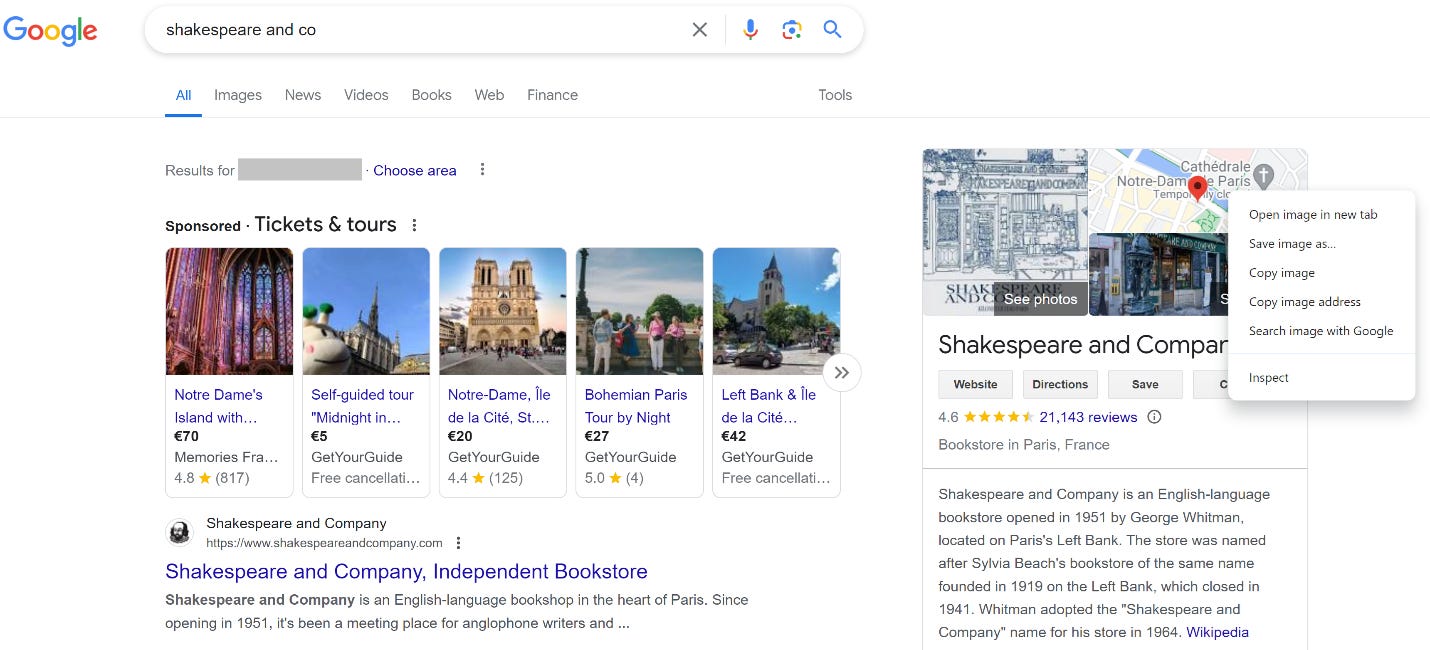
Figure 1 illustrates this change. The map is still displayed, but it is no longer clickable, and the familiar shortcut to Google Maps is gone. In effect, Google Maps lost its one-click advantage, at least for EU desktop users.
Crucially, this change did not occur outside the EU: the same platform and services operated elsewhere, with only the choice architecture differing.
This created a natural experiment: what happens to user behavior when a dominant service loses a powerful default?
What Users Did
If competition truly were only one click away, removing that click should have made it easier for users to discover and adopt alternatives. One might expect more exploration or switching to competing mapping services.
That is not what we observed.
Instead, EU users reacted by searching more. Searches for both “maps” and “google maps” increased sharply, by more than 20 percent, relative to non-EU countries. In other words, when the shortcut disappeared, users actively took extra steps to reach mapping services.
More strikingly, searches for “google maps” increased just as much as searches for the more neutral term “maps.” This matters because these two queries reflect very different intents. While “maps” could, in principle, lead users to alternative services, “google maps” signals a clear preference for the incumbent.
The added friction did not redirect users toward competitors. It primarily led them back to Google Maps.
More Competition Did Not Materialize
Looking beyond search behavior to actual usage reinforces this conclusion.
Overall traffic to Google Maps did not meaningfully decline after the DMA change. Desktop visits remained essentially unchanged, and mobile traffic, which was not affected by the design change during 2024, shows no corresponding shift. What did change was how users reached Google Maps: organic search traffic increased substantially, replacing the traffic that previously came from clickable maps embedded in search results.
By contrast, we find no robust increase in searches for or traffic to competing mapping services such as Bing Maps or OpenStreetMap. Apple Maps shows some suggestive patterns, but these effects are small and constrained by ecosystem factors. Even where alternatives exist, they capture only a negligible share of user attention.
The message is clear: removing a default advantage changed navigation paths, not market structure.
Contestability ≠ Neutrality
These findings highlight a distinction that is central to the DMA but easy to overlook in practice: choice neutrality does not guarantee contestability.
From a formal perspective, the post-DMA search interface is more neutral. It no longer steers users directly to Google Maps. Yet neutrality alone did not produce competitive pressure.
Why? Online mapping services are a hard case for contestability. Users hold strong beliefs about quality and reliability. Habits are deeply ingrained. Learning a new interface takes time. And viable substitutes, at least from the user’s perspective, are limited. In such environments, removing a shortcut may reduce default bias, but it does not fundamentally alter preferences or beliefs.
As a result, users respond rationally: they incur a small additional cost to continue using the service they already trust.
Implications for Regulators
The Google Maps case should not be read as evidence that the DMA is ineffective. Rather, it illustrates the limits of uniform remedies in markets with very different competitive dynamics.
The DMA successfully removed a one-click advantage and altered user pathways. What it did not do, at least in this context, was meaningfully increase contestability. That gap matters for enforcement going forward.
If the goal is to foster competition, regulators may need to consider market-specific and multi-layered interventions, especially in settings where user beliefs and habits are strong. Monitoring compliance with formal rules is not enough; understanding how users actually respond is essential.
These lessons are unlikely to be specific to online mapping services alone. More broadly, they highlight how difficult it can be to ensure contestability in digital markets where user choices are shaped by habits, learning costs, and strong beliefs about quality.
As regulators apply the DMA to a wider range of services, and as new digital markets continue to emerge, this case underscores the importance of closely examining actual user responses, rather than relying on how choice is presented on paper. Interface changes can matter, but their competitive effects will depend on market-specific features, including the availability and perceived quality of alternatives.
The broader takeaway is therefore not about any single technology or market, but about regulatory design. Ensuring contestability may require a combination of tools that go beyond default removal, tailored to the ways users search for, and adopt digital services.
About the research: This study examines how users responded to a change in Google’s search interface introduced to comply with the European Union’s Digital Markets Act (DMA). Beginning in January 2024, Google removed clickable maps and direct links to Google Maps from desktop search results for EU users. We exploit this policy-induced change using a difference-in-differences design comparing EU countries to non-EU countries unaffected by the reform. Combining weekly Google search data with website traffic estimates, we analyze how users adjusted their search behavior and access to mapping services. We find that searches for both “maps” and “google maps” increased sharply in the EU, but this did not translate into meaningful traffic gains for competing mapping services. Overall usage of Google Maps remained largely unchanged, suggesting that removing default advantages alone may be insufficient to ensure contestability in markets with strong incumbents and limited substitutes.
This post is based on research published in the Marketing Science and is included in the Platform Papers references dashboard:
Pape, L. D., & Rossi, M. (2026). Is Competition Only One Click Away? The Digital Markets Act’s Impact on Google Maps. Marketing Science.
Platform Updates
Google’s Project Genie shakes up gaming (1) (2) (3) (📑): The new AI tool that generates playable worlds from text prompts sent gaming stocks tumbling as investors feared creative disruption. Yet developers see promise—viewing Genie less as a threat and more as a tool to speed up world-building and spark new ideas in game design.
Xbox enters a new era as Phil Spencer retires (📑): After 38 years at Microsoft, Spencer steps down from Microsoft Gaming CEO, naming AI executive Asha Sharma as the new CEO. Matt Booty is promoted to content chief, while Sarah Bond departs. Sharma vows a renewed focus on great games, core fans, and human‑driven creativity for Xbox.
Valve faces £656 million antitrust trial over Steam fees (📑): A UK class action led by digital advocate Vicki Shotbolt accuses Valve of abusing its dominance by taking a 30% cut and blocking cheaper game sales. The case argues Steam’s pricing rules inflate consumer costs and stifle competition, reviving long-running debates over fair revenue sharing.
eBay snaps up Depop for $1.2 billion (1) (2) (3) (📑): eBay will acquire fashion resale app Depop from Etsy for $1.2 billion, expanding its push into circular commerce and younger audiences. The deal strengthens eBay’s platform strategy amid global recommerce consolidation, as rivals like Vinted and Naver race to scale secondhand marketplaces.
Amazon tops Walmart as platform rivalry deepens (📑): Amazon’s $716.9 billion in revenue surpassed Walmart’s $713.2 billion, underscoring its dominance as a diversified digital platform. Walmart is now mirroring Amazon’s playbook with a growing marketplace and ad business, even as its AI strategies diverge—Amazon builds its own tools while Walmart partners with OpenAI and Google.
AI threat shakes SaaS business model (🔈): A trillion‑dollar software sell‑off followed Anthropic’s AI legal tool, sparking fears that AI agents could replace costly per‑user subscriptions. Wall Street is split—existential threat or overreaction—as giants like Microsoft and Salesforce bet their moats will hold.
Zuckerberg faces trial over teen social media addiction (🔈): In a landmark case, Meta’s CEO defends Instagram’s design amid claims that it harms teens’ mental health. The lawsuit tests whether Section 230 extends to product design, raising the question of whether platforms can be held accountable for design choices that keep users hooked.
EU targets TikTok’s ‘addictive design’ (📑): The European Commission’s preliminary ruling alleges that TikTok’s infinite scroll, autoplay, and algorithmic feeds pose addictive risks to minors, violating the bloc’s Digital Services Act. The probe could force TikTok to overhaul its core design—or face fines up to 6% of its global revenue.
Incumbents, Platforms, and Beliefs (🔈): The latest episode of the Talking about Platforms podcast—our intellectual cousin—features Prof. Alessio Cozzolino.
UK watchdog reins in Apple and Google (📑,🔒): The Competition and Markets Authority secured commitments from both firms to treat app developers more fairly, boost transparency, and improve iOS interoperability. But critics say the voluntary measures fall short, casting doubt on their effectiveness.
Warner Bros issues Paramount a final ultimatum (📑,🔒): Warner Bros Discovery gives Paramount seven days to top Netflix’s $83 billion offer or step aside. The ultimatum turns the bidding war into a high-stakes sprint as WBD’s board reiterates support for the Netflix deal, and Paramount scrambles to sweeten its $108 billion hostile bid.
Platform Papers is published, curated and maintained by Joost Rietveld.